There are 13 digits on the back of almost every product you have ever bought. Most people never think about them. If you sell things – or plan to sell them in Europe – here is everything you need to know.
Let's start with a story
On 26 June 1974, a cashier at a supermarket in Troy, Ohio, scanned a pack of Wrigley's Juicy Fruit chewing gum. The price – 67 cents – appeared on the screen automatically. It was the first time in history that a product had been identified at checkout by a machine.
The number behind that scan? That was a GTIN.
Half a century later, that same system runs global trade. Every product on every shelf in every store in the world has one. And right now, the EU is building its next generation of product regulation on top of it.
What is a GTIN?
GTIN stands for Global Trade Item Number. It is a unique number that identifies one specific product.
Not a brand. Not a product category. One specific product.
Your blue mug and your white mug are two different products – two different GTINs. Your 250ml bottle and your 500ml bottle – two different GTINs. Every size, every colour, every variation gets its own number.
Think of it as a product's ID number – the way every person has a unique national ID, every product has a unique GTIN. No two products in the world share the same one. It is the product's fingerprint in global trade.
A GTIN is not a random string of digits. It is built from three parts:
- Company Prefix – a block of digits that belongs exclusively to your company, registered in GS1's global database. Anyone who looks up your GTIN instantly knows which company it belongs to.
- Item Reference – digits you assign yourself to tell one product from another. Blue mug gets one number, white mug gets a different one.
- Check digit – one digit at the very end, calculated automatically. If anyone types the number wrong, the check digit will not match and the error is caught.
One important detail: the GTIN belongs to the brand owner – whoever puts their name on the product. Not necessarily the factory that made it. If you design a product and have someone else manufacture it under your brand, the GTIN is yours to assign.
How a GTIN gets onto your product – and how that is changing
A GTIN on its own is just a number. To make it useful, it needs to be encoded onto the physical product in a way that machines can read. That is where data carriers come in.
For fifty years, the main carrier was the barcode – those black and white stripes you see on every product. A barcode is simply a visual way of encoding your GTIN so a laser scanner can read it in a fraction of a second.
Different barcode formats exist for different situations. The striped EAN-13 barcode (13 digits) is the standard for products sold to consumers in Europe. The ITF-14 barcode is used on shipping boxes. But the data inside all of them is the same thing: a GTIN.
Now that is changing. A new format called the GS1 Digital Link QR code is replacing the traditional barcode – gradually, but with a firm deadline.
A GS1 Digital Link QR code is not just a different shape. It works completely differently. Where a traditional barcode encodes only a GTIN, a GS1 Digital Link QR code encodes a full web address. That address looks like this:
https://id.gs1.org/01/05060123456781
The "01" is the GS1 code for GTIN. The number that follows is your 14-digit product code. When anyone scans this QR code with a smartphone, they are taken directly to a live page with product information – no special app needed.
This matters for several reasons. A GS1 Digital Link QR code can carry not just the GTIN, but also a batch number, a serial number, and an expiry date – all at once. And crucially, it can serve as the entry point to a Digital Product Passport, which we will get to shortly.
This is why Sunrise 2027 matters. It is GS1's initiative to ensure that all retail checkout systems in the world can read 2D codes – including QR – alongside traditional barcodes by 2027. Many European checkouts today still read only the old striped format. After Sunrise 2027, a QR code on packaging will be fully accepted everywhere. If you are designing new packaging now, building it around a GS1 Digital Link QR code is the forward-compatible choice.
Four types of GTIN – which one do you need?
GTINs come in four lengths, each for a different situation:
GTIN-8 – 8 digits. Used only on very small products like a lip balm or a tiny medicine bottle, where there is no space for more digits. Rare.
GTIN-12 – 12 digits. The American format, called UPC. Works in Europe but is not the European standard.
GTIN-13 – 13 digits. The European format, called EAN-13. The standard across Europe and most of the world. Also accepted in North America. This is the right choice for any brand selling in the EU or internationally.
GTIN-14 – 14 digits. Not for consumer packaging. Used on shipping boxes, cases, and pallets moving through warehouses and logistics systems.
Simple rule: if you sell products to customers in Europe – whether you are based there or exporting there – you need GTIN-13.
Why a GTIN matters right now
Here are four concrete situations where you need one.
Selling on Amazon. Amazon requires valid GTINs for product listings. The number must come from GS1 and Amazon checks it against the GS1 database – not just that the number exists, but that it is registered to your company. A mismatch means your listing gets blocked.
Selling on Google Shopping. Google uses GTINs to understand exactly what you are selling. Products with a verified GTIN rank higher and qualify for richer ad formats. Products without one get pushed down or hidden.
Selling to European retailers. The systems that large European retailers use to manage their product catalogues are built around GS1 identifiers. If a retailer cannot verify your GTIN, your product cannot easily enter their system – whether you are selling from inside or outside Europe.
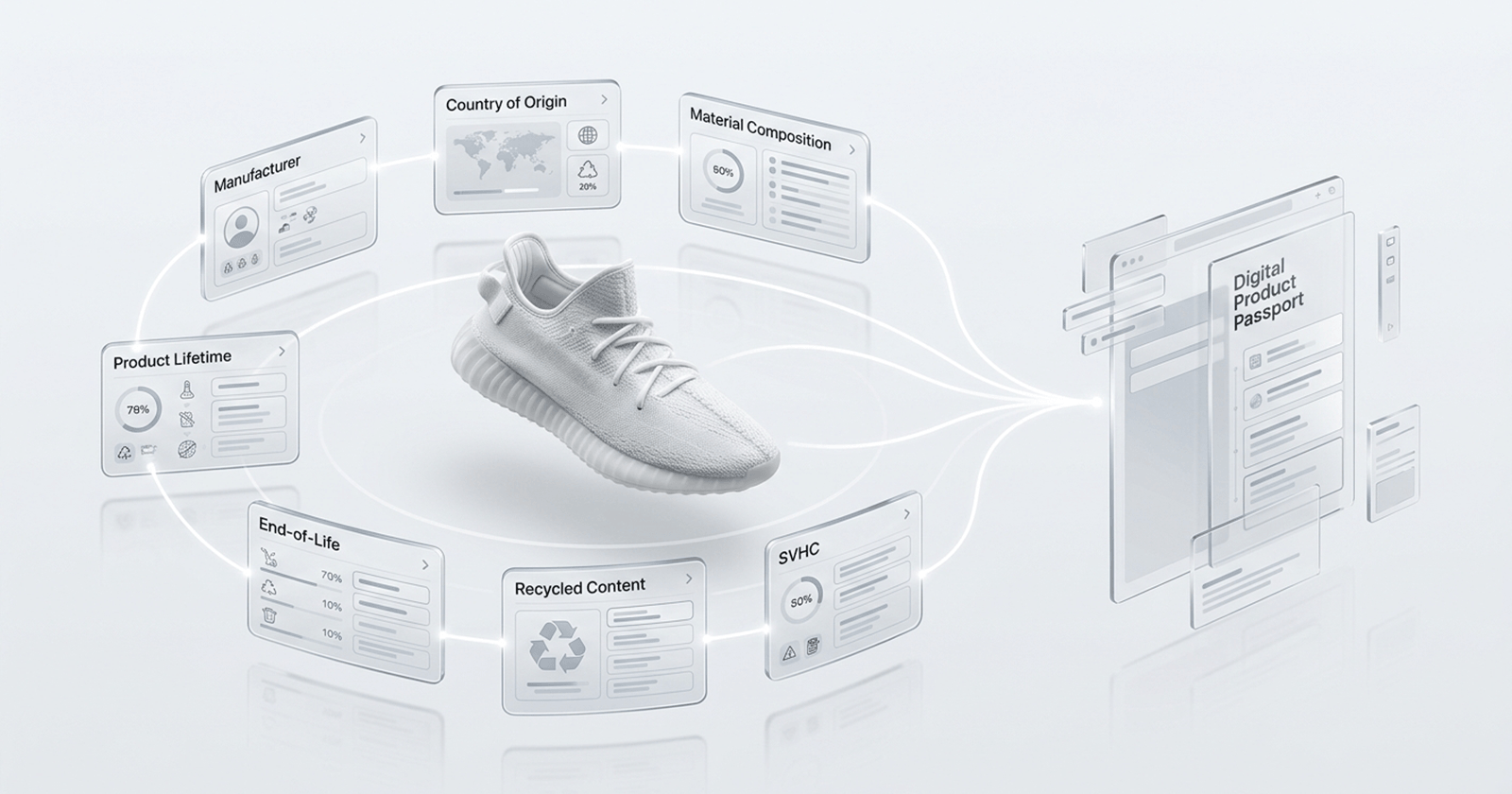
EU Digital Product Passport – coming from 2027. From 2027, many products sold in Europe will need a Digital Product Passport: a digital record accessible via QR code, containing information about materials, sustainability, and recyclability. The GTIN is the legal anchor of that passport. No valid GTIN means no valid passport. This applies to importers and non-EU manufacturers just as much as to European brands.
One more identifier: GLN
When you join GS1 and get your Company Prefix, you also unlock the ability to create GLNs.
GLN stands for Global Location Number. Where a GTIN identifies a product, a GLN identifies a place – your warehouse, your factory, your office, your distribution centre.
For the EU Digital Product Passport, this matters directly. ESPR – the EU's Ecodesign for Sustainable Products Regulation – requires that a product's passport identifies the company legally responsible for it: the manufacturer, the importer, or the authorised EU representative. That company identity in the passport system is built on a GLN.
GTIN identifies the product. GLN identifies the company. Both come from the same GS1 membership. Getting your Company Prefix now means both are in place when you need them.
[H2] Where to get your GTIN – wherever you are in the world
GTINs are issued by GS1 – a non-profit organisation founded in 1977, headquartered in Brussels, with member organisations in 150 countries and over two million companies using its standards worldwide.
You do not need to be based in Europe to get a valid GTIN. GS1 operates a national organisation in almost every country. Companies register with their local GS1 organisation – in China, India, Turkey, the US, Japan, or wherever they are incorporated – and receive a Company Prefix. That prefix and all GTINs generated from it are globally valid, including for EU market access and Digital Product Passport compliance.
GS1 China, GS1 India, GS1 Turkey, GS1 UK, GS1 US – every national GS1 organisation issues GTINs that work everywhere in the world. The first digits of your GTIN will reflect the country where you registered, but that does not indicate where the product was made or where it is sold. It simply shows which GS1 office issued your prefix.
For companies based in Europe, you register with your national GS1 office – GS1 Germany, GS1 France, GS1 Netherlands, GS1 Belgilux (covering Belgium and Luxembourg), GS1 Spain, GS1 Latvia, and so on.
To find your local GS1 organisation, go to gs1.org and select your country.
Membership involves an annual fee, which is paid as long as your codes are in active use. If you stop paying, your prefix is deactivated in the GS1 database – meaning your GTINs can no longer be verified by Amazon, Google, retailers, or EU regulators. Keep your membership current for as long as your products are on the market.
Fluxy.One is a GS1 Belgilux Solution Partner, meaning its platform is directly integrated with GS1 standards for Digital Product Passport compliance.
Why you should not buy GTINs from unofficial sources
Search online for "buy EAN barcode" and you will find many websites selling codes for a few euros each. Some look professional. A few even use GS1 branding without permission.
Do not buy from them.
Here is why. A GTIN purchased outside the official GS1 system will either not appear in GS1's public database at all, or will appear registered to a completely different company. When Amazon or Google checks your barcode automatically, they find a mismatch. Your listing gets blocked or your account flagged.
There is also a collision risk. Numbers sold by unofficial sources sometimes come from old, recycled product codes. Two different products sharing the same identifier in a supply chain database causes inventory errors, problems at customs, and compliance failures.
GS1 states it clearly: numbers purchased outside the GS1 system may overlap with legitimate GS1 numbers, with serious consequences for labelling and traceability.
The practical calculation is simple. Reprinting thousands of packaging units because an unofficial barcode failed verification costs far more than registering correctly from the start.
GTIN and the Digital Product Passport: why they belong together
Let us bring everything together.
The EU's Ecodesign for Sustainable Products Regulation – ESPR – requires that products sold in Europe carry a Digital Product Passport from 2027 onwards, starting with textiles and several other categories. This passport is a structured digital record containing materials information, sustainability data, repairability guidance, and recycling instructions.
ESPR requires that every passport is connected to a unique product identifier. The GTIN is one of the identifiers explicitly recognised for this purpose.
Here is how it works end to end. Your GTIN is embedded in a GS1 Digital Link QR code on your packaging. That QR code points to your product's digital passport. The passport is registered to your company, verified through your Company Prefix in the GS1 database. Anyone who scans the code – a customs officer, a retailer, a consumer, a recycler – reaches your passport and can confirm it belongs to you.
Without a valid GTIN registered to your company, the passport cannot be properly verified. An unverifiable passport does not meet the ESPR requirement. This applies equally to a brand in Berlin and a manufacturer in Hanoi supplying the European market.
For brands and manufacturers preparing now, {ZeroBox} connects these pieces in one place: register your product with its GTIN, and the platform generates the GS1 Digital Link QR code, builds the packaging compliance profile, and structures the Digital Product Passport – with no compliance team required.
Quick check: go to gepir.gs1.org and enter your product's barcode number. If it appears registered to a different company – or is not found – you know what to fix.
Ready to connect your GTIN to a fully compliant Digital Product Passport? {ZeroBox} makes that step one. [Get started →]
This article reflects GS1 standards and ESPR requirements as of April 2026. ESPR delegated acts defining specific requirements by product category are still in development. This article is for general orientation and does not constitute legal or technical advice.


.png)