As our PPWR and EPR guide explains, registration with your national EPR authority is a one-time event. You do it once, you are on record, and the obligation is satisfied — until the same time next year, when the registry asks you to declare how much packaging you placed on the market.
That annual declaration is where most small brands run into trouble. Not because the regulation is complex, but because the data it requires is almost never in one place.
The actual problem is data, not regulation
An EPR declaration asks a straightforward question: how many kilograms of each packaging material did you put on this market last year? How much plastic, how much cardboard, how much glass?
To answer that, you need two things. First, the material composition and unit weight of every product's packaging — what it is made of, layer by layer, and how much each layer weighs. Second, how many units of each product you actually sold in that market during the reporting year.
The second part changes every year. The first part doesn't — unless your packaging changes.
The problem is that most brands have never formally recorded the first part anywhere. Packaging specs live in supplier emails. Material weights are printed on sample boxes somewhere. When the declaration is due in January, someone has to go and find all of this, build a spreadsheet, and calculate the totals. Then do it again for the next country, in a slightly different format, on a different deadline.
It is not conceptually hard. It is operationally exhausting — and it produces figures that are, at best, approximate.
Meet Sophie
Sophie runs a small knitwear label from Berlin. She sells on Etsy, picks up orders through Instagram, and ships to customers across Europe. About 400 units a year, three SKUs. Not a big operation — but enough to trigger EPR obligations in every country she ships into.
The channel doesn't matter to the registry. It doesn't matter whether the customer found her sweater on Etsy or in an Instagram story. What matters is that a physical package crossed into that country. That makes Sophie a producer under local law — which means registration and an annual declaration, whether she knew about it or not.
She registered when someone told her she had to. She filed her first declaration by guessing the cardboard weight of her mailer box, and quietly hoped no one would look too closely.
This year, she decided to do it properly.
Step one: the box
Sophie's sweaters ship in a kraft cardboard mailer. Inside is a tissue paper wrap and a small poly bag around the garment itself. Three materials: cardboard, tissue paper, plastic.
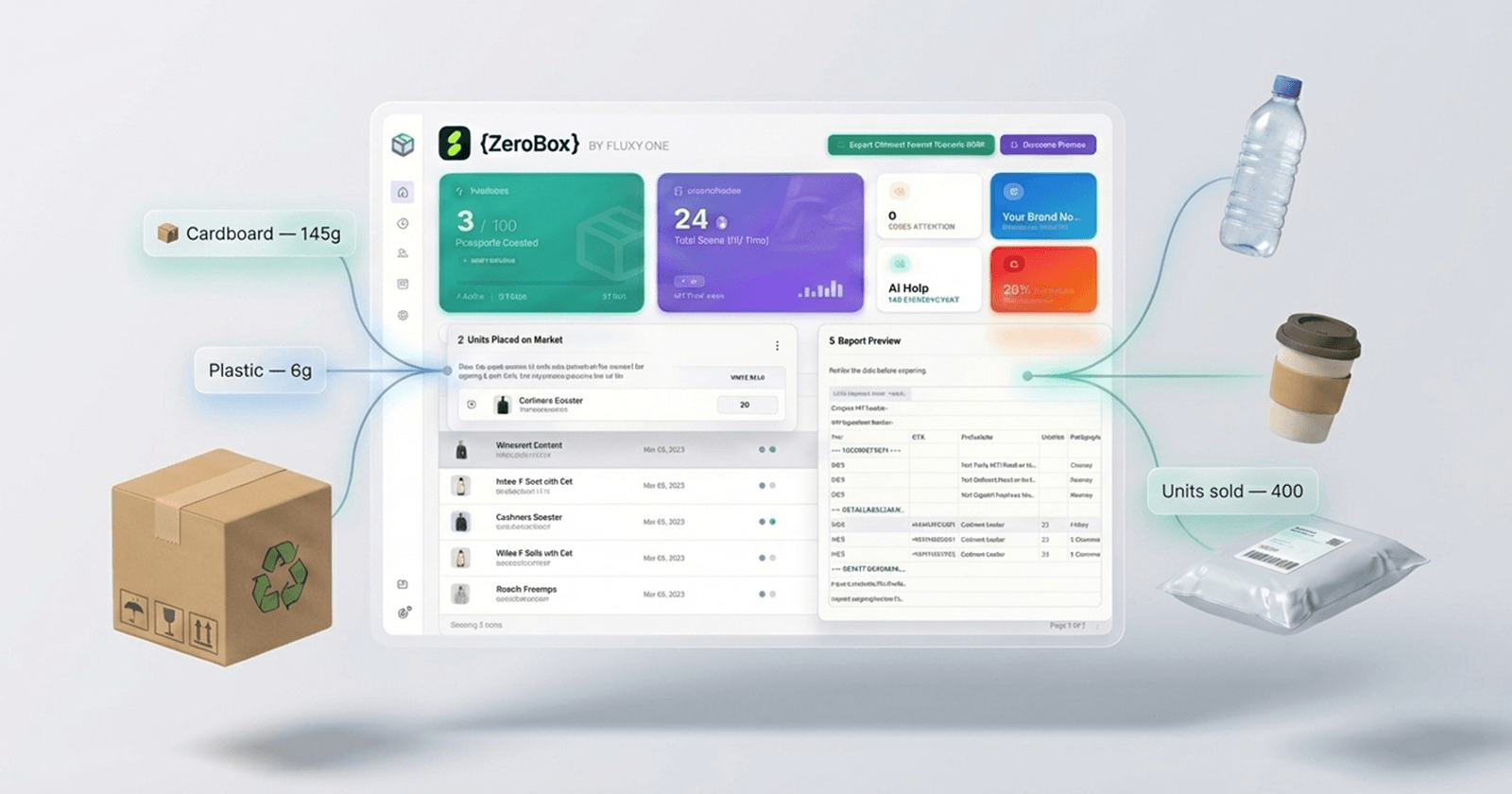
She emailed her packaging supplier and asked for the weight of each component. The reply came back the same day — it is on every production spec sheet, she just had never asked for it before. The mailer: 145g. The tissue: 8g. The poly bag: 6g.
She entered those three numbers into her product profile in {ZeroBox}. Once, against the product's GTIN. Done.
Step two: the declaration
January arrives. Her EPR registry wants to know how much packaging she placed on the market in 2025.
She opens {ZeroBox}, goes to the EPR reporting section, selects 2025 as the reporting year, and enters one number per market: how many units she sold there.
The platform calculates the rest — total cardboard placed on market, total paper, total plastic. She takes those figures to her national registry portal and files. The whole thing takes about twenty minutes per country, because the packaging data was already there.
What {ZeroBox} generates is a universal format report: aggregated material weights calculated from her product portfolio. It does not replace the national filing — she still logs into her registry and submits there. What it removes is the calculation she would otherwise have to do from scratch every year, differently for every market.
The same data, used again in 2027
Sophie entered her packaging composition to sort out her EPR declaration. That data has a second obligation attached to it — one that arrives in 2027.
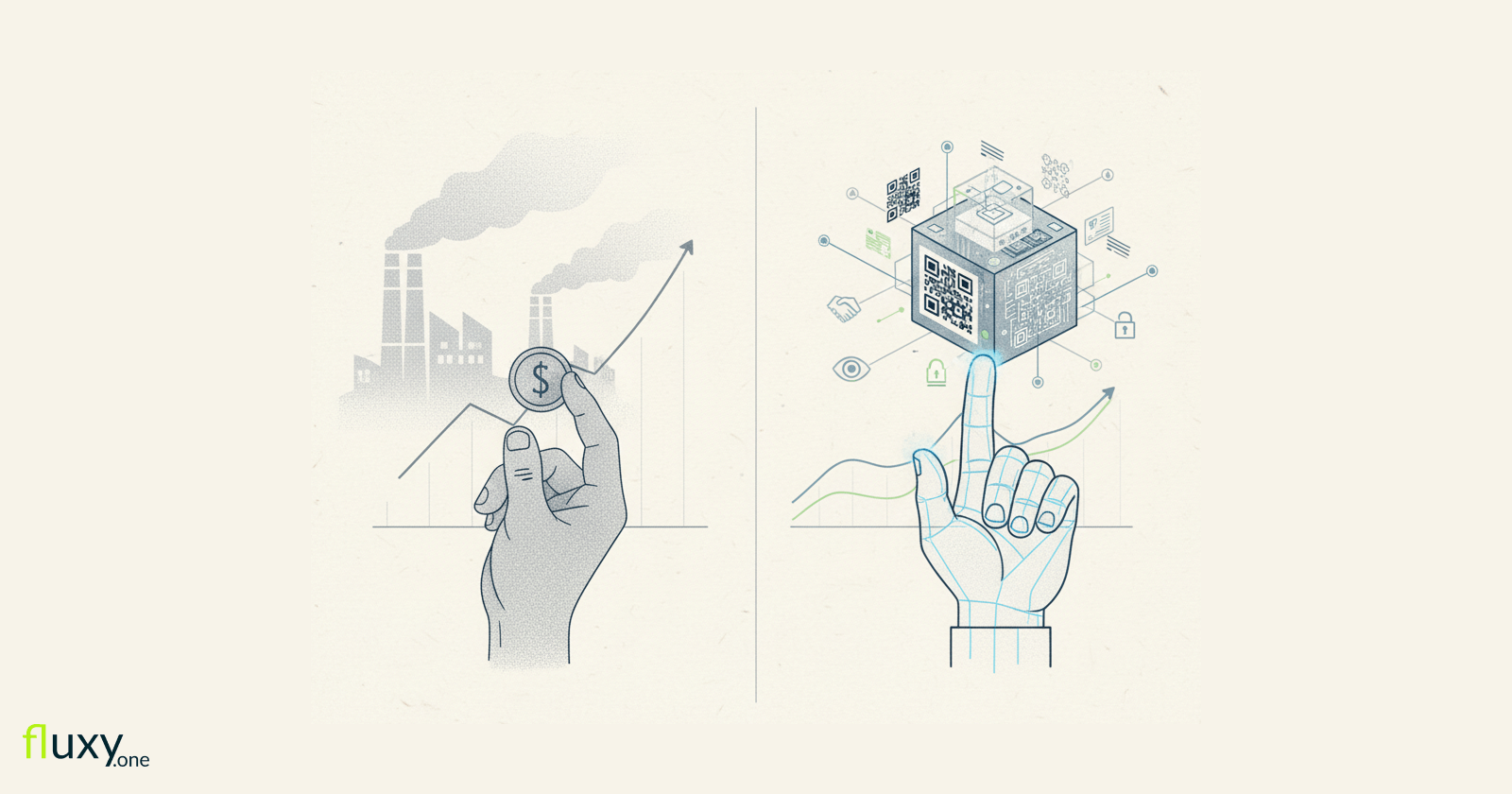
From 2027, EU regulations require packaging to carry a digital identifier: a QR code linking to structured product and packaging information, including material composition. The data behind that QR code is exactly the same data that goes into an EPR declaration — what the packaging is made of, layer by layer, and how much of it.
Brands that have their packaging composition properly recorded now will not need to reconstruct it when the digital labelling requirement arrives. In {ZeroBox}, the packaging profile that generates Sophie's EPR report is the same profile that powers her product QR code. When 2027 comes, she is already compliant. There is nothing left to prepare.
One dataset. Two obligations. Entered once.
What happens as you grow
Sophie currently sells into two countries. The same logic holds for five, or ten.
Every EU country requires its own registration and its own annual declaration. Each has its own portal and its own deadline calendar. Those filings still happen separately — there is no way around that. But the underlying data is the same everywhere: material type, unit weight per product, units sold per market. Enter the sales figures for each country, get the material weights for each country, file in each portal.
The numbers are reliable because they come from one source. Not from separate spreadsheet reconstructions, each done under deadline pressure, each slightly different from the last.
One thing worth checking before your next deadline
On the {ZeroBox} dashboard, there is a figure called EPR Tax Health. It shows what share of your products have complete packaging data on record — the kind needed to generate a valid declaration.
If it reads 50%, half your products are missing that information. If those products have real sales volumes, your declaration will undercount your actual packaging obligation. The registry may accept the filing and flag it later at audit.
The useful thing about this number is the timing. Check it in autumn, and you have months to request missing specs from suppliers. Check it the week your deadline arrives, and you have a problem.
Sophie's EPR Tax Health now reads 100%. It took one email to her supplier and twenty minutes of data entry. She is ready for this January's EPR declaration. She is ready for 2027. And she did not have to do the work twice.
Your packaging data is worth recording properly once. {ZeroBox} is where to put it — so the next declaration, and the one after that, is an export and a copy-paste, not a project.
National EPR declaration requirements, deadlines and portal formats vary by country and continue to evolve. The universal format report generated by {ZeroBox} is an informational tool to help prepare your packaging data; each brand remains responsible for the accuracy of its submitted declarations. This article is for orientation, not legal advice.