Articles
Digital Product Passport (DPP) Implementation Guide | Fluxy.One Insights
Navigate ESPR, DPP, and GPSR compliance with our universal 5-step implementation guide. Use AI and GS1 standards for simple, instant compliance. Book a Demo.


Navigate ESPR, DPP, and GPSR compliance with our universal 5-step implementation guide. Use AI and GS1 standards for simple, instant compliance. Book a Demo.
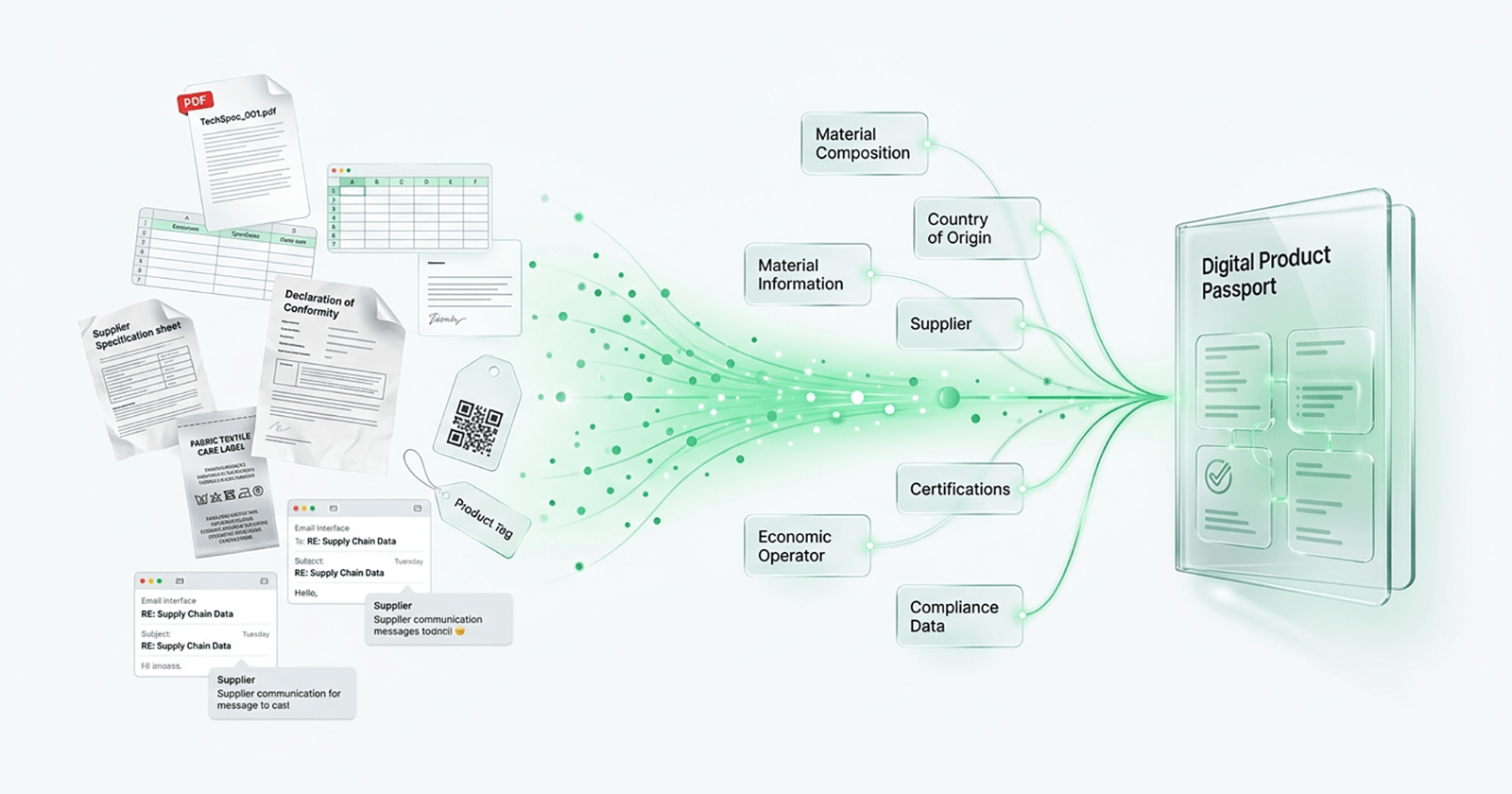
The Digital Product Passport (DPP) is no longer theoretical; it is rapidly becoming the mandatory key to accessing the EU market. For manufacturers, importers, and exporters, the complexity can feel overwhelming. Fluxy.One cuts through this complexity, offering the Simple, Instant, and Guaranteed solution you need. We use cutting-edge AI automation and the foundation of GS1 standards to ensure your products achieve compliance and zero fines.
Based on ESPR (EU 2024/1781), Battery Regulation (EU 2023/1542), CIRPASS-2 Recommendations (November 2025), and Official EU Sources
A Digital Product Passport is a digital container of information about a product's lifecycle, sustainability, compliance, and safety. It's accessed via a QR code and is increasingly mandatory under EU regulations.
The key to success is moving past complexity and embracing a strategy that is Simple, Instant, and Affordable.
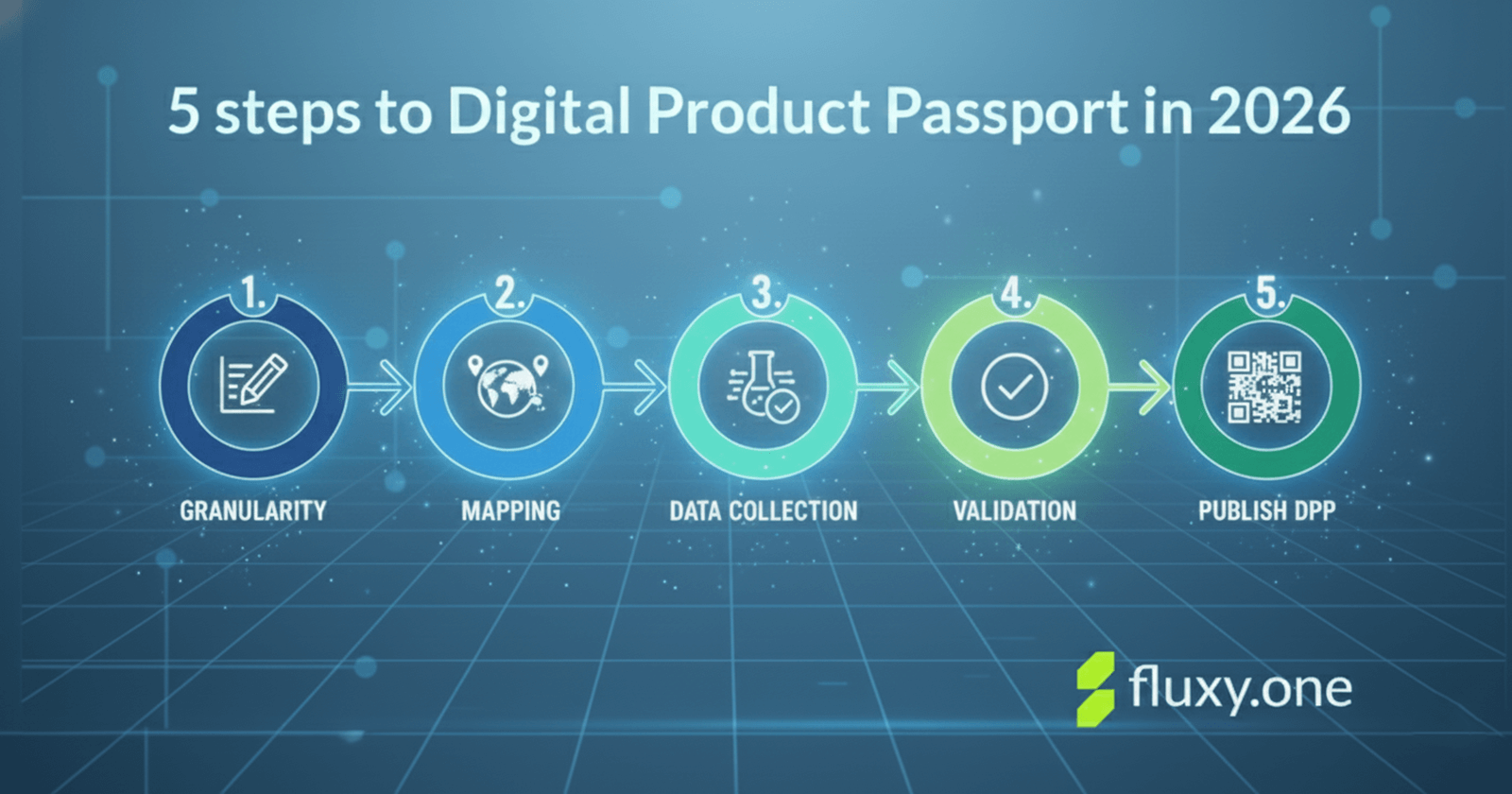
Regardless of your industry, DPP implementation follows the same five steps:
STEP 1: Understand Data Granularity (Before Collecting Anything)
STEP 2: Map Your Product Portfolio
STEP 3: Collect Product Data
STEP 4: Validate Data
STEP 5: Create the DPP, Generate Links & Publish
Let's walk through each step in detail.
Granularity is the detail level at which you identify and track products. Think of it like deciding whether to track:
Ask yourself: What is your product type?
IMPORTANT: Your granularity choice affects how many DPPs you need to create. Lower granularity = fewer DPPs = less work = simple setup. Start with model-level or batch-level based on your product, unless you are in the Battery sector where item-level is required.
Now that you understand granularity, list ALL products that will have DPPs.
Output: A simple spreadsheet with Product name, Model/variant, GTIN (if you have one), Annual volume, Batch frequency, and Current data availability (%).
Don't worry if GTINs are missing. You'll register them next.
Now collect the data your DPP will contain. You need to make "good-faith effort."
This applies primarily to sustainability and supply chain transparency data. You must: Request data from your suppliers, document your requests, compile what they provide, and clearly mark missing data as "pending" or "unknown". Mandatory compliance data (safety tests, REACH) MUST be present.
Regardless of your industry, a DPP must include:
The five-step process applies to ALL industries. However, specific data requirements vary by product type.
Use what you already have:
Priority: Use internal + supplier data 95% of the time. Using specialized software can dramatically speed up extraction and formatting of this data for compliance, which helps in achieving instant results. For more details on the technical aspects of the data structure, review our guide on DPP data requirements.
Before publishing, verify your data is complete and accurate.
✔︎ Product Identification (All products have GTIN or unique code)
✔︎ Material Composition (Percentages add up to 100% or "unknown" marked)
✔︎ Supply Chain Transparency (At least direct supplier info provided)
✔︎ Compliance & Safety (Test certificates attached or referenced)
✔︎ Data Accuracy (Verify all links work, check numbers/dates)
✔︎ Missing Data Documented (All "unknown" fields clearly marked and attempts documented)
Your DPP is compliant when it transparently reflects the reality of your data availability while meeting minimum safety standards, ensuring guaranteed compliance.
Once data is validated, you're ready for the final step: creating the DPP and applying it to your products.
Here's the key point: under ESPR, the responsible economic operator (you, the manufacturer/importer) is legally accountable for the existence and content of the DPP.
IMPORTANT: You cannot modify DPP data after it's published. If something needs correction, you must create a new version.
A DPP Operator is a certified, third-party company responsible for securely hosting your DPP data and ensuring regulatory compliance.
The "responsible economic operator" (manufacturer or importer) is legally accountable for DPP existence, content accuracy, and registry upload. The DPP Operator is a service provider who hosts, secures, and maintains accessibility of the data.
Different product categories have different mandatory implementation dates under ESPR.
Rather than listing specific dates here, we recommend checking Fluxy.One's blog for the most current industry timelines and regulatory updates.
Q: Do I need a GTIN for every product?
A: GTINs are the standard identifier for DPP. If you don't have GTINs registered with GS1 standards, you'll need to register them before publishing DPPs.
Q: What is a GS1 code or GTIN?
A: A GS1 code or GTIN (Global Trade Item Number) is a globally unique product identifier, typically the number encoded in a standard barcode. You obtain it by registering with your local GS1 standards organization. It is essential for identifying the product linked to the DPP.
Q: What if my supplier won't provide data?
A: Document your request. Mark that data as "pending" or "unknown" in your DPP. As long as you show good-faith effort, you are demonstrating transparency. Mandatory safety data cannot be skipped.
Q: Can I change DPP data after publishing?
A: No. DPP data is immutable once published. If corrections are needed, you must create a new version.
Q: What happens if I don't publish a DPP?
A: Your products may be: Blocked at EU customs, Removed from shelves, or Subject to fines. Publication is not optional—it ensures zero fines.
Q: How long must I keep DPP records?
A: You must maintain data accessibility for the expected lifetime of the product, often exceeding $10$ years.
✔︎ DPP implementation follows the same 5-step process across all industries.
✔︎Start with understanding your data granularity level (model, batch, or item).
✔︎ Good-faith effort applies to transparency data—document your collection attempts.
✔︎ Use a certified DPP Operator for secure hosting and regulatory compliance to achieve a simple setup.
✔︎ Plan early—data collection takes longer than you think, but specialized tools can help.
✔︎ DPP is not just compliance—it's a competitive advantage.
✔︎ Start NOW, regardless of your deadline.
The timeline for ESPR, DPP, and GPSR compliance is accelerating. Fluxy.One makes your compliance journey Simple, Instant, and Affordable. Let our AI automation and GS1 standards expertise handle the complexity. Stop reading regulations and start implementing.
Book a free consultation to see the Fluxy.One platform in action and secure your zero-fine guarantee.
Fluxy.One — the transparency infrastructure for the global economy.
Book Free Demo



Privacy is important to us, so you have the option of disabling certain types of storage that may not be necessary for the basic functioning of the website. Blocking categories may impact your experience on the website. More information

Privacy is important to us, so you have the option of disabling certain types of storage that may not be necessary for the basic functioning of the website. Blocking categories may impact your experience on the website. More information